A little over 600 weeks ago, back in 2014, Vance Kennedy told Stanislaus County leaders and concerned citizens that,
“You could solve this problem in a week.”
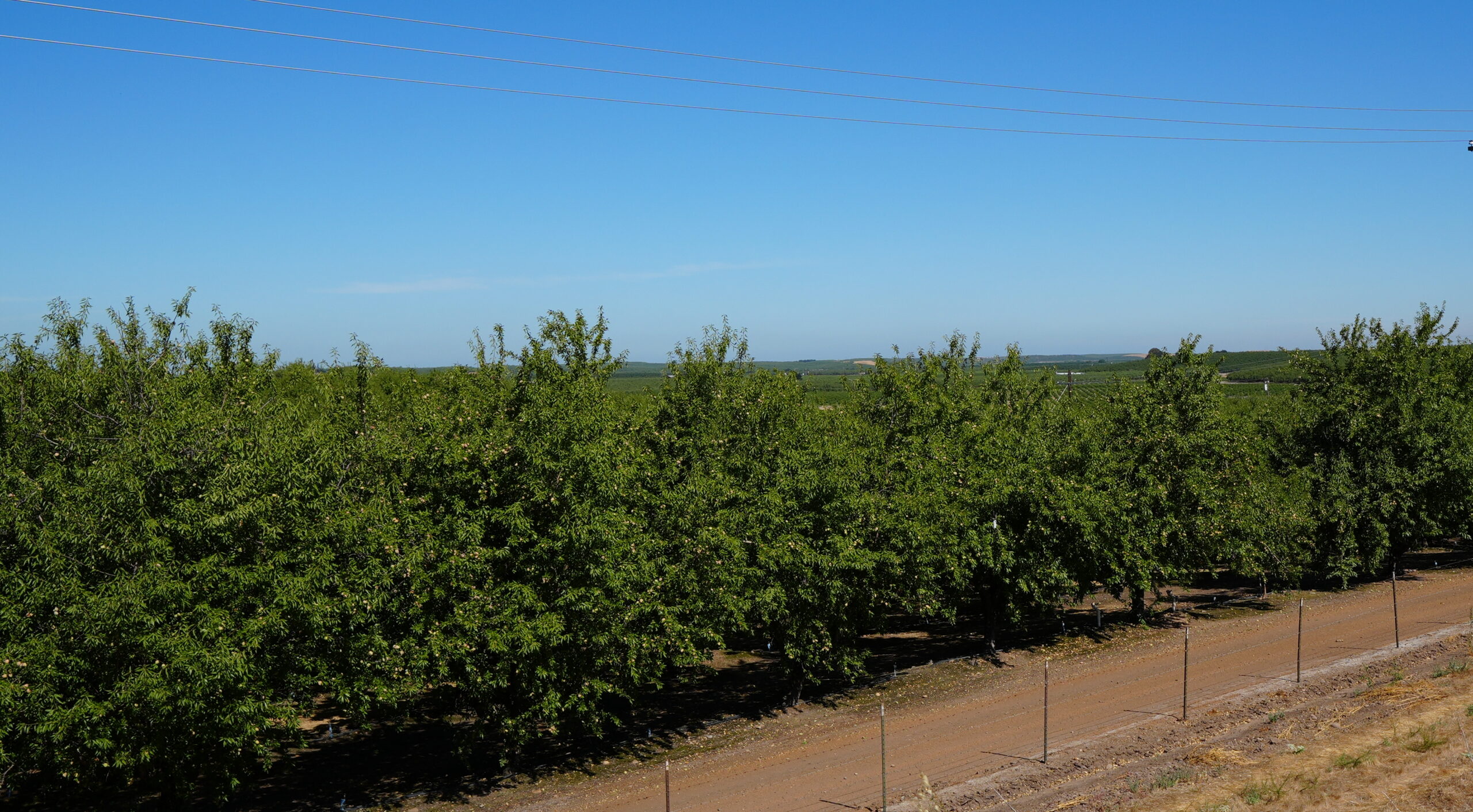
Kennedy was referring to the “problem” of pumping groundwater on Stanislaus County’s east side, where the last viable aquifer in the San Joaquin Valley was being gouged full of holes to irrigate thousands of acres of new almond orchards.
“That’s our savings account,” said Kennedy, an award-winning hydrologist whose long career with U.S. Geological Survey featured pioneer achievements studying acid rain and using tracers to study water quality and movement.
“That’s our insurance in the case of an extended drought.”
Kennedy’s solution to the problem of pumping groundwater in the rolling hills of eastern Stanislaus County was simple math:
“We need to do a water balance,” said Kennedy, who realized that the east side aquifer was our only insurance against a prolonged drought. He knew early on that depleting the aquifer would jeopardize not just east side residents but the entire county.
Protests against calculating a water balance arose immediately. The so-called “stakeholders” — meaning in this case, “anyone with a conflict of interest” — squawked loudest. They included groundwater-dependent farmers and farm developers, well drillers and almond hullers. Those same stakeholders, with a few additions, became members of the Stanislaus County Water Advisory Committee (WAC), which was formed in 2015.
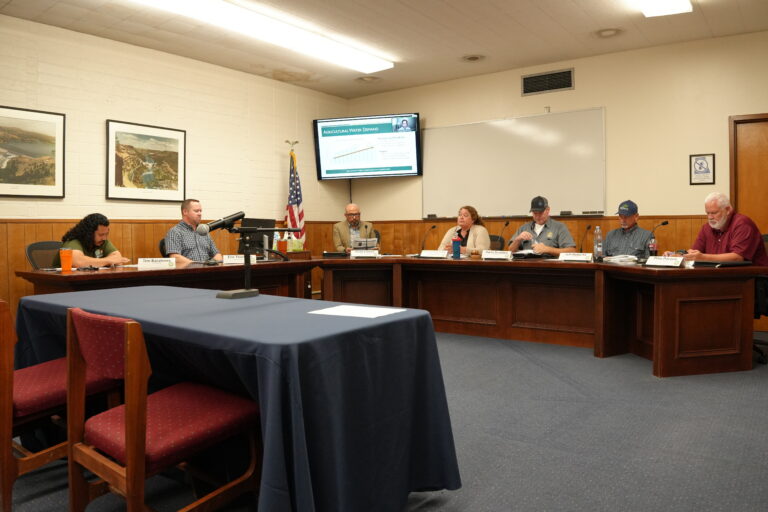
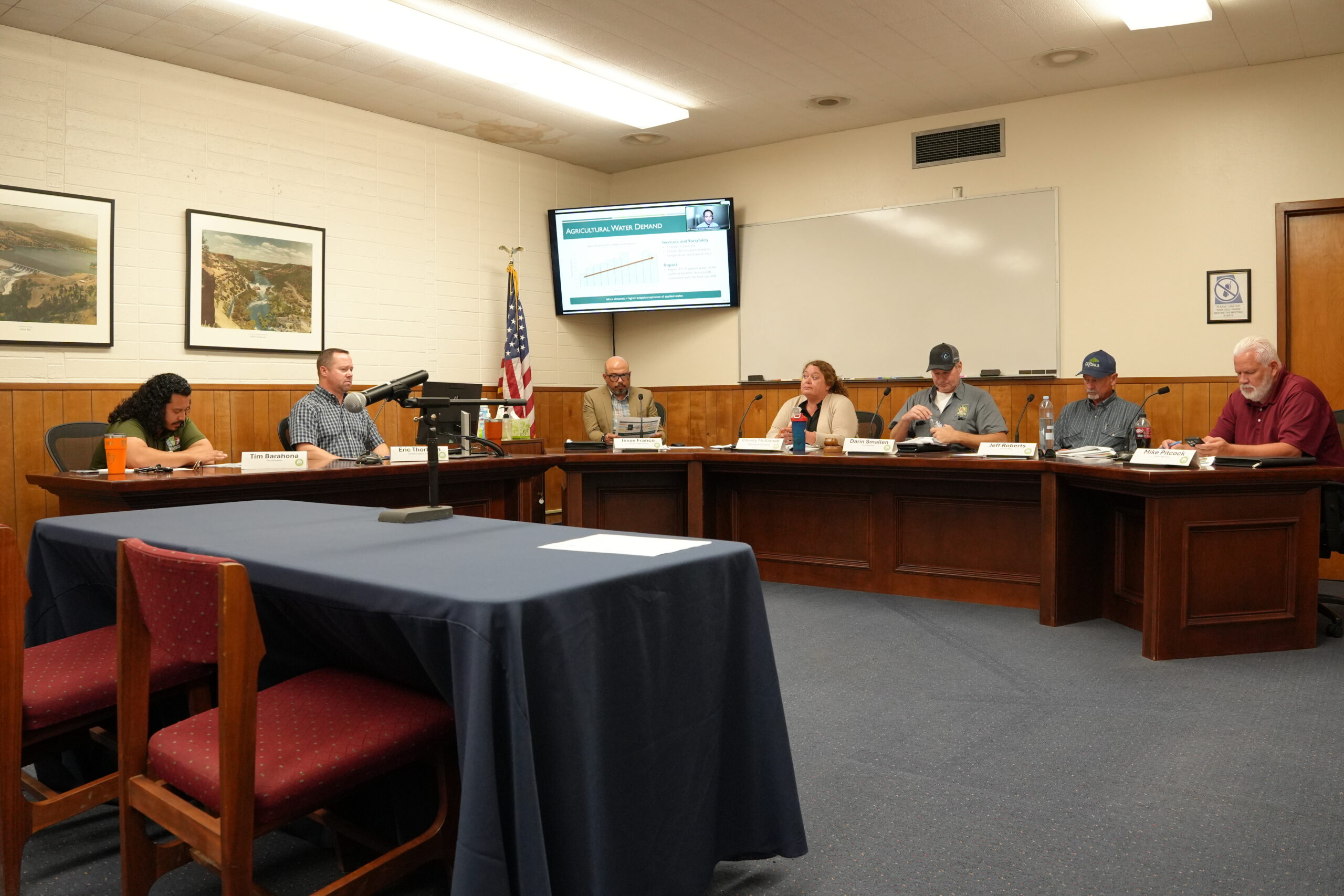
Vance Kennedy had high hopes that the WAC would impose strict limitations on pumping groundwater on the east side. He should have known better. After attending meetings and offering advice when asked, Kennedy realized that most WAC members had little interest in limiting pumping. Instead, it seemed to Kennedy that the WAC was an attempt to delay implementation of the state-mandated Sustainable Groundwater Management Act (SGMA) of 2014.
“I’m not going back,” said Kennedy, after almost a year of attending meetings. “They’re not going to do anything.”
Kennedy also thought that SGMA’s 2042 deadline for achieving groundwater sustainability would permit pumping far beyond a reasonable time for restrictions to enable recovery of the east side aquifer.
Meanwhile, despite dilatory action from county authorities, state mandates forced action. SGMA required formation of Groundwater Sustainability Agencies and Groundwater Sustainability Plans throughout the Valley’s endangered aquifers and basins.
By 2017, the seven members* of the Stanislaus and Tuolumne Rivers Groundwater Basin Association had formed the required Groundwater Sustainability Agency. They used a $1,000,000 grant of taxpayers’ money to fund a thorough study by Todd Groundwater that would enable them to produce a Groundwater Sustainability Plan.
In 2022, after five years’ study and input from farmers, urban residents, public agencies and elected representatives, including east side farmers and farm developers, Modesto Irrigation District submitted a first draft Groundwater Sustainability Plan to the State Department of Water Resources (DWR). That draft was ruled “incomplete.”
It took another two years’ of intense research and planning to accomplish a revised plan. The updated plan was submitted in July of 2024. DWR approved the plan in February of 2025. Sustainability by 2042 now seemed within reach.
Scheduled to go into effect next January, the revised plan will impose severe limits on pumping groundwater on Stanislaus County’s east side. Current pumping volumes could be reduced by as much as fifty percent or more.
The small but wealthy and politically connected group of farmers and farm developers on Stanislaus County’s east side are frantic. Groundwater-dependent farmers who planted thousands of acres of almond orchards over the last viable aquifer in the San Joaquin Valley are now looking for more ways to stall the only measures that could restore that same aquifer to sustainable levels.

Just recently, it appears that Stanislaus County Supervisors are more than willing to indulge their wishes. In a letter supposedly detailing measures to implement the action plan already approved by the seven member Stanislaus and Tuolumne Rivers Groundwater Basin Association, including Stanislaus County itself, the county’s Department of Environmental Resources has recommended further study by a consultant paid for by local taxpayers.
Keep in mind that well over a decade ago, Vance Kennedy recommended a simple measure that would have limited pumping to sustainable levels. Keep in mind also that these same farmers Stanislaus County Supervisors continue to coddle knew groundwater-dependent farming was unsustainable when they planted. They calculated they could reap millions of dollars at the cost of ruining the aquifer, so they kept planting and pumping.
They knew a monotonous monoculture of almond orchards meant lost grasslands and oak woodlands. It meant the destruction of the creeks, streams, ponds and vernal pools vital to local wildlife and native plant communities. They kept planting and pumping anyway.
They knew that thousands of acres of almond orchards meant loss of critical habitat for wintering raptors, including Ferruginous and Rough-legged Hawks, Bald and Golden Eagles, and Peregrine and Prairie Falcons. They kept planting and pumping anyway.
They knew that resident Burrowing Owls, White-tailed Kites and Tri-colored Blackbirds, already threatened, would face further reductions in vital feeding and nesting areas. They kept planting and pumping anyway.
They kept planting and pumping. They planted and pumped even during some of the most severe droughts in recent history. They planted and pumped despite the knowledge that a 70,000 to 90,000 acre-foot deficit every year was destroying what Vance Kennedy called “our last and best savings account” against the growing probability of a sustained drought worse than any in the history of Valley agriculture.
When Robert Frobose, current President of the Modesto Irrigation District (MID) Board of Directors, learned that Stanislaus County Supervisors were recommending further study of the plan they had already approved, he was indignant.
“We don’t need any more taxpayer-funded studies,” he said.
“We’ve done the studies and approved the plan. Stanislaus County already approved the plan. What we need to do now is make sure the plan gets put into effect by the January deadline. I don’t care if it’s January first or thirty-first. January 2027 is our deadline and we can’t have further delays.”
Like Vance Kennedy, Frobose realizes delay means 70,000 to 90,000 more acre-feet drained from the east side aquifer every irrigation season. For some idea of scale, keep in mind that one acre-foot of water is sufficient for two urban households over the course of one year. Every irrigation season, east side farmers are pumping equivalent water for 140,000 to 180,000 California households’ yearly use.
Last week, Robert Frobose composed a letter on behalf of MID urging “the County to keep its consultant on track and avoid lengthy review and redundant professional services associated with a technical review of the developed and approved GWUMP” (Groundwater Use Management Plan).
Like Vance Kennedy, Robert Frobose realizes an ongoing 70,000 to 90,000 acre-foot deficit per year means the permanent ruin of “our last and best savings account” against the growing probability of a sustained drought brought on by rapidly changing weather patterns. His letter is on the July 28 agenda for approval by the MID Board of Directors.
As for spending taxpayer monies for more studies of a plan already approved by the seven members of Stanislaus County’s Groundwater Sustainability Agency, Stanislaus County residents shouldn’t need to be reminded that this is a county that won’t fund even minimal spay and neuter programs for animal services that have been reduced from insufficient to cruel. This is a county with a studied indifference to severe shortfalls in behavioral health and homeless services, yet has money for redundant studies that serve the special interests of a small group of east side farmers and farm developers.
It’s more than past time to stop subsidizing wealthy and politically connected farm developers at the expense of hard-working County residents who deserve better from their elected representatives. It’s time to stop the destruction and begin the restoration our east side aquifer.
Vance Kennedy died in 2023. He was one-hundred years old. Though his one-week utilitarian remedy stretched into over a decade, it finally featured careful planning by dedicated public servants with our best interests in mind.
The best way now to honor Vance Kennedy’s lifelong commitment to sustainability through wise water use is to support the implementation of our Groundwater Sustainability Plan now, as recommended by Robert Frobose, and the seven members of our own Groundwater Sustainability Agency.*
After over 600 weeks, it’s time to stop robbing our East Side Water Bank.
* Oakdale, Modesto, Waterford, Riverbank, Stanislaus County, Modesto Irrigation District, Oakdale Irrigation District
Hear, hear!
Planting new water-hungry orchards during a drought – one that may become a mega-drought due to climate change – is a crime against humanity. What planet do these so-called farmers live on? It’s my understanding that many of these orchards are owned by investors who have no commitment to healthy farming practices and sustainability. It seems easy enough for the experts conducting the water use studies to figure out the water needs for the average household and the cost-benefit of the agriculture users, and see that the aquifers are not being recharged with the snow packs and rainfall we are getting this decade. We don’t need redundant studies; if anything, the calculations only get worse and delaying implementation of the Groundwater Sustainability Plan is a recipe for disaster. Does anybody remember the Dust Bowl of the 1930s?
Yes, some of us remember the Dust Bowl of the 1930! The question is are you ready for the California Dust Bowl of 2030? Vance Kennedy was correct, we can stop the depletion of our ground water AND support THE AMERICAN WAY OF LIFE at the same time. The SGMA are not the AMERICAN WAY. They are simply another way to support government programs (jobs) and manage “scarcity”. The simple way out of scarcity and to stop pumping ground water is to PROVIDE MORE SURFACE WATER, PERIOD! In the 1920’s San Francisco realized they needed water and power. They solved their problem. They accomplish a monumental task of building a dam in a National Park, Hetch Hetchy, and built a delivery system in 1923!! OK, that was a good idea then. Today, not so much. Simple answer: Nuclear power plants in conjunction with desalinization. Revert Hetch Hetchy water and power back to the Valley where it naturally belongs. California will thrive AGAIN. Be aware, if we do nothing but manage scarcity and ignore the collapse of the Colorado River system, California is done.
Keep the pressure on Eric, you’re doing a terrific job and generating tremendous support. I was hopeful when I read the Grand Jury would investigate. Now I wonder how deep the corruption goes to put the rest of us in such peril for a few greedy farmers and their pals.
Yes, Vance was protective of our local water rights, but the Eastside is not the only source of water that could be used for MID landowners.
1) The rainfall onto the local cities amounts to more than 30,000 acre*feet of water annually. That resource should not be squandered away – it should be contained and used at a later date. Some of the rainfall is diverted to ponds, but most of it runs into the rivers and lost into the ocean.
2) There are fresh water basins within the MID boundaries that are used for regulation purposes, but are not used as a groundwater recharge source. This could easily be done with proper “dry well” designs.
3) There are a series of lined canals that run through the cities in the MID. Easch of them could be recharge sources during the irrigation season. This could be a significant amount of water for our “bank account”.
4) The Tuolumne River and Dry Creek drainages could be used as recharge souces with the installation of “beaver dams” along their routes.
The water Czars of the communities should consider all of these sources.
Thank you Lee. We shouldn’t forget the water rights of downstream users. The water that is “lost into the ocean” is critical to downstream and Delta farmers. It’s critical to downstream homeowners and urban users. It’s critical to the wetlands, grasslands and oak woodlands of state and national parks. That “lost into the ocean” water is crucial to hold back tha increasing encroachment of salinity that threatens fresh water suppplies for users adjacent to the Delta. That “lost” water is needed for fish, wildlife, and recreational users. Migrating salmon use local wetlands to rest for their long journeys. We are not the only people dependent on that water.
Nice work Eric.
I say clear the orchards and build a bunch of Epstein-Johnston data centers (Jeffery/Mike). The buzzing diesel power plants will simulate Yosemite waterfalls and coax us all to sleep at night. While we are at it, we could get rid of journalism too. All we need to know comes from Boards and Committees and elected leaders. Newborns will get a birth certificate and a NDA to sign. AI will figure out how to make more water. No worries, mate.
Have a little faith in your leaders.