
HAVEN — Healthy Alternatives to Violent Environments — is a catalyst for individual empowerment and societal change, advocating for those impacted by domestic violence, sexual assault or human trafficking and working to end gender-based violence.
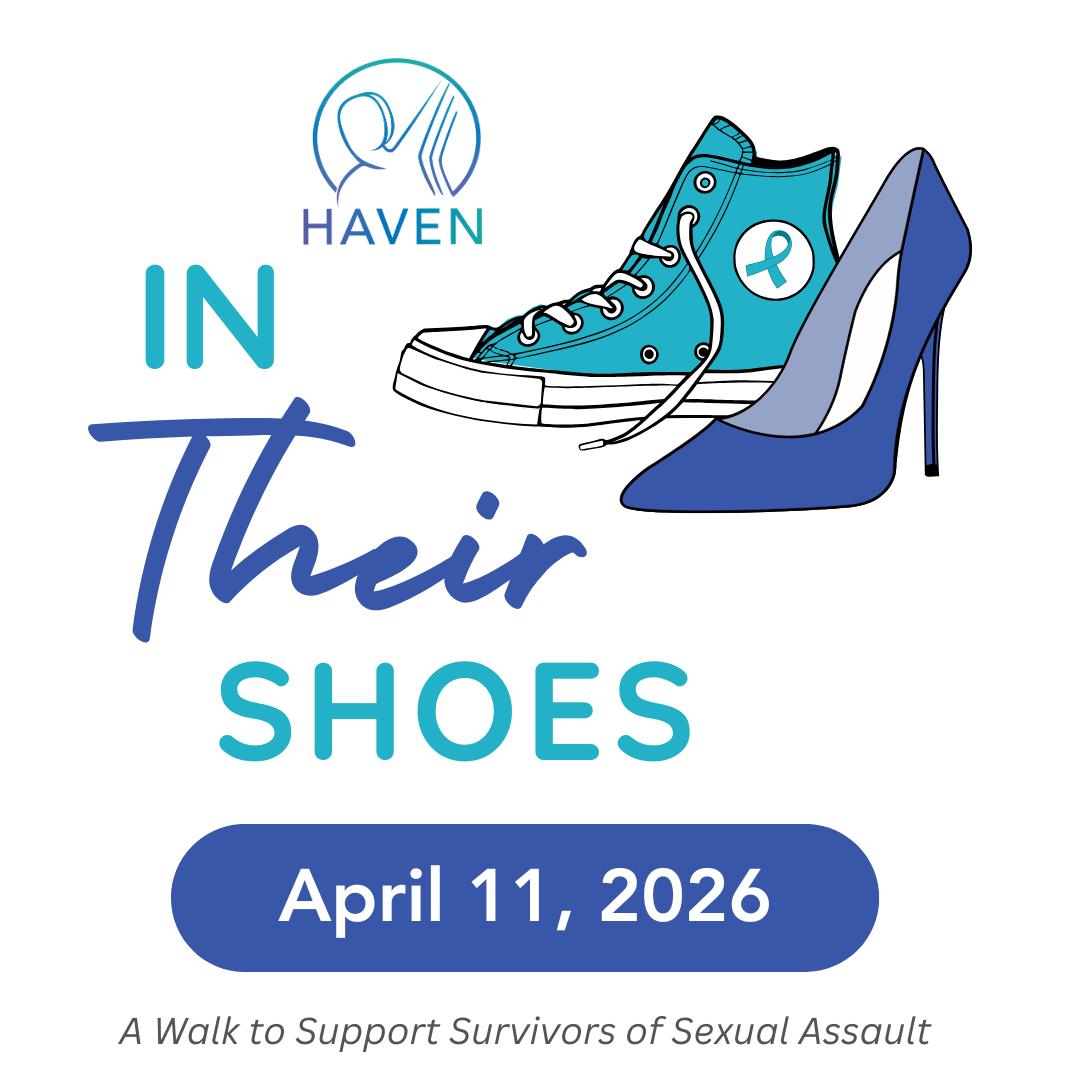
HAVEN, one of the most respected and venerable nonprofits in Stanislaus County, will again be welcoming the community to its traditional fundraiser – Walk for Survivors: In Their Shoes on Saturday, April 11th at 9 am, with registration starting at 9:30 – in front of Greens on 10th Street. Everyone in the area who wants “to celebrate the survivors in their lives,” as Executive Director May Rico said the other day, is warmly encouraged to join in the fun that day – which, of course, also supports the important work that HAVEN does every day.
With roots dating back to 1977, HAVEN has a long history as well as a strong philosophical commitment to adapting to the needs of our community. It has also always provided a wide array of services that are available to everyone experiencing domestic violence, sexual abuse, or human trafficking, including programs for both adults and children. As always, funding adequate to the great needs in the community for HAVEN’s services is an ongoing challenge for the agency. In a recent interview, May Rico shared her thoughts about this challenge and other issues related to HAVEN’s mission and work, which are so essential for our community and our society.
TP: During the pandemic there was a lot of additional fundings for agencies like HAVEN but that has since disappeared. Please describe some of the challenges that have resulted from that loss of funding, and how the agency has responded.
May Rico: In the face of shrinking resources – which always means shrinking staff – we are just trying to meet demand and provide services as best we can. But, faced with all those cutbacks, we have had some growth. In our school-based program, we are very pleased that we are serving an increasing number of schools and children through those collaborations. We also saw an increased number of our human trafficking services provided to victims of labor trafficking, which is really important. We’ve been trying to increase visibility that our human trafficking services are not solely sex trafficking but also labor trafficking (such as the exploitation of immigrants; or wage theft).
And this year, with some new partners, we were able to add back some legal advocates so we’re starting to do more around restraining orders than we had for a while.
We also have some additional funds for our housing program, which has been able to grow back a bit, so we’re able now to provide more services than we were over the last couple of years.
With the current federal administration there has been a lot of uncertainty. For example, there is a three-year grant program that concluded in September, and we still don’t know whether our renewal application for that program will be funded. Something else that has changed are the conditions that have been put on funding, Before some of the very, very strict rules were put around non-discrimination and making sure you were providing services in an inclusive fashion, and trying to reach the most vulnerable in the community that might not be seeing you as a community resource because of an impression they’ve experienced. That was very much supported by federal funders in the past and now it’s the opposite. So, this creates a lot of uncertainty about what the focus for federal funding will be.
TP: Why do you think our society is so hesitant to listen to the survivors of domestic violence or sexual abuse?
May Rico: Sexual abuse is endemic in our culture. It is a part of who we are as a society and people don’t always like to acknowledge that because you’d like to think this is something that doesn’t happen except by individual perpetrators. But we have a society that repeatedly creates situations where people are sexually abused, and, at the same time, folks are saying that that shouldn’t be a part of who we are. It is horrible when these happen. There’s a reluctance to believe that someone we like could do this horrible thing so instead of believing the victim, we automatically say ‘she’s got to be lying.’ So long as we refuse to acknowledge that sexual abuse is endemic in our culture, so long as we refuse to acknowledge that for very long periods people who are in power and are liked and are respected have also been able to abuse others and get away with it, so long as we aren’t able to acknowledge that that has happened and continues to happen than we are never going to have a safe environment for victims to come forward and tell their stories.
 We promise people justice as a culture, as a society. We promise people that if something happens to you that shouldn’t have happened and you come forward, we will put it right as best we can. But most sexual abuse survivors who go through the system will tell you that’s not the case.
TP: How can people change the dynamic related to sexual abuse in this society? What would you ask them to do?
May Rico: What I would ask people to do is this – if they find themselves part of this conversation and if they hear people around them telling them ‘oh, they’ve got to be lying’ or ‘that person could never do that sort of thing’ is to instead of just dismissing it, investigate it. We need to hold our leaders accountable to a deep and fair investigation. Hold people accountable when we find they’ve done wrong.
TP: You have been with HAVEN for many years. Please describe a shift in the field you’ve noticed over that time.
May Rico: There have been many shifts and improvements in our field over the years that HAVEN has mirrored or tried to mirror. I think the biggest one is acknowledging that survivors of all genders need to be served. Two things can be true at the same time (1) The overwhelming majority of victims of sexual abuse and domestic abuse are women and violence against women is part of a cultural and societal fabric built around who has power but, at the same time, it’s also true that (2) all genders experience violence. If you are transgender nonbinary, you might experience violence at an even higher rate than folks who are cisgendered. Regardless, survivors come in all genders and we should provide services to all victims regardless of their gender, whether they’re male victims or nonbinary or are in same-sex relationships.
TP: What would you like to say to any survivors who may read this article?
May Rico: Haven is here for you. We don’t ask immigration status. We serve all genders. Services are not dependent on gender or gender expression or immigration status. With the exception for some mandated reporting, we do not share personal information with law enforcement, government agencies, or anyone else. We always want people to feel comfortable and confident in the conversations they have with us and to have control over their own information.
https://www.havenstan.org/
Call the HAVEN office at (209) 524-4331
(Monday-Friday, 8:30 am – 4:30 pm)
Or call HAVEN’s 24-hour crisis line at:
(209) 577-5980
Toll-free 1-888-45HAVEN