
Last Thursday, a small but lively crowd gathered in downtown Modesto to celebrate the coming launch of The Modesto Focus, an online newspaper that will offer a new model for local news coverage of Stanislaus County and nearby. Long considered a “news desert,” the northern San Joaquin Valley has wanted for truly local and civics-oriented news for decades.
Back in the 1980s into the 1990s, when print journalism was nearing the end of its Golden Age, the McClatchy-owned Modesto Bee thrived because want ads and traditional print advertising provided ample funding for award-winning photographers like Al Golub and tough journalists like Nancy Marinan. Even as late as the twenty–teens, fearless reporters like Joanne Sbranti didn’t let local power barons keep her from telling the truth about the economic forces behind dry wells at people’s small home ranches.
Nevertheless, the realities of tectonic shifts in media platforms as well as declining ad revenues had even then reduced local news to a few dimming lights in a growing sea of darkness, brought on by the juggernaut of sensationalism Rupert Murdoch brought to American shores when he purchased the New York Post late in 1976.

Once Murdoch acquired Fox in 1985, the shift from print to electronic media accelerated. Within a few years, radio talk shows and tabloid television would become driving forces for “alternate” news sources that would gradually became mainstream and dominant.
Traditional newspapers suffered. Even giants like McClatchy, which owned leading newspapers throughout the nation and especially from Sacramento southward to Fresno, began a slow decline that accelerated rapidly after the turn of the century. The biggest losses were to civic awareness, especially at local levels, where growing staff shortages and an increasingly disengaged public resulted in less and less coverage of city and county government.
Today, the Modesto Bee has lost much of the institutional knowledge that informed local journalism for decades. There is still competent reporting — the recent investigation into wasteful spending at the Stanislaus Council of Governments is a good example — but staff shortages and a lack of local experience have resulted in a diminution of what was already insufficient oversight of government affairs.
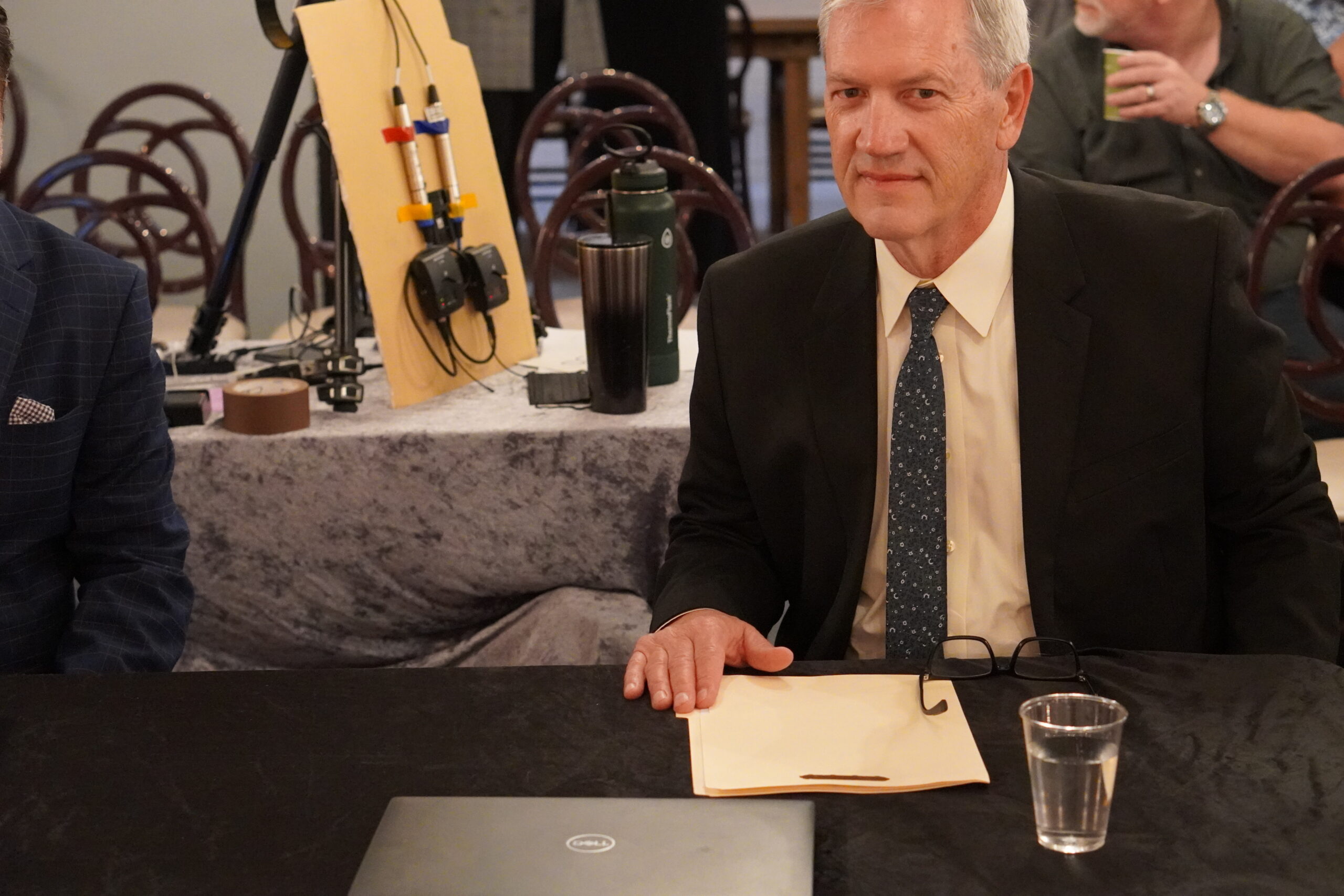
The Modesto Focus will bring citizens of Stanislaus County a wealth of much-needed local talent, beginning with former Bee stalwarts Garth Stapley, Marjike Rowland and Joe Kieta, a trio of dedicated journalists with decades’ experience reporting, editing, and managing local news. The Focus will eschew “breaking news” in favor of probing reports that reveal how local government works (or doesn’t) with the mission of developing civic awareness and engagement,
Longtime Bee readers will be especially pleased to know that Garth Stapley will be the “Accountability Reporter.” With decades’ experience at the Bee, Stapley brings a reputation for fearless and accurate reporting, exactly what local citizens need to reengage with government.
None of us should forget that success for local news depends on readers who accept the responsibility for informed self-government. We should all do our part to become as informed and engaged as possible in the making and workings of local government. The quickest and easiest way to do so now is by signing up for this all new, “non-profit community based newsroom.” There will be no paywall. You can sign up here for updates on the launch, scheduled for mid-August.
I am over the moon about Modesto Focus! What is happening in local government today — and indeed in the federal government — is facilitated by the lack of reporting and lack of public engagement.
Democracy requires an educated and informed public.
Good NEWS, indeed!
I agree with your comments. I would add that McClatchy made a disasterous $4.5 billion aquisition of Knight Ridder in 2006. If this had not happened McClatchy would have been in a much better and stronger position to navigate the difficult and changing newspaper landscape.
This is very good news. Have been very informed about local events since the Modesto Bee went digital only. How and when can you sign up for focus?
Al: click on the link at the end of the story (red line under “here”).
Much Needed! I’m excited.
Thank you for this great news!
If the Modesto Focus is as professional, accurate and hard hitting as the Merced Focus Stanislaus county will be well served! Bravo!
Great to see this news provider taking root in our county.
Out of curiousity I asked ChatGPT for the use of different media by age. The data is shown below.
I hope this new organization will be able to use most/all of the media types for all/most ages.
——————————————————————————————————————–
Here’s a breakdown of **primary and secondary news sources** by age group, based on the latest data from 2025 surveys and reports:
———————————————
## 🧑🎓 Gen Z (approx. 16–24 / 18–29)
**Primary source:**
* **Social media / video platforms** (TikTok, Instagram, YouTube, Snapchat, etc.) — 40–44% cite them as their main news source ([World Economic Forum][1]).
**Secondary sources:**
* **Traditional outlets (TV news, newspapers/websites)**: \~24–28% use these as secondary channels ([American Press Institute][2])
* **News influencers and podcasters** (incl. personalities like Joe Rogan) and **AI chatbots**: about 15% rely on these weekly among under‑25s ([Reuters][3]).
———————————
## 🧑 Millennials (≈ 25–40)
**Primary source:**
* **Digital platforms + social media** — majority daily news via online apps, websites, aggregators; about 71% use social media daily ([American Press Institute][2]).
**Secondary sources:**
* **Traditional media**: Many still access TV, local newspapers or major news websites weekly (74% weekly from traditional outlets) ([American Press Institute][2]).
————————–
## 🧑💼 Adults 30–49
**Primary source:**
* **Digital / online devices** (smartphone/tablet/computer) — around 72% cite digital as main source; social media and news websites dominate ([Deloitte][4], [Pew Research Center][5], [American Press Institute][6]).
**Secondary sources:**
* **Television news** and **radio/print** remain relevant; roughly 45–50% still use TV, 6–8% radio weekly; newspapers 3–5% often ([Pew Research Center][5], [American Press Institute][6]).
————————-
## 🧓 Adults 50–64
**Primary source:**
* **Television** remains strong (\~42% cite as main, and \~72% getting news weekly from TV) ([Wikipedia][7], [Pew Research Center][8], [American Press Institute][6]).
**Secondary sources:**
* **Digital (websites/apps)** (\~46% at least weekly); radio (\~8%), print (\~3–5%) ([Pew Research Center][5]).
——————————
## 🧓 Seniors 65+
**Primary source:**
* **Television** dominates — roughly 86% name TV as main outlet, and 95% get weekly news from it ([American Press Institute][6]).
**Secondary sources:**
* **Radio and print publications** are still used (radio \~72%, print \~46%, digital \~27%) ([Wikipedia][7]).
—
Thanks for this story, Eric. It is so appreciated! We are working to make sure The Modesto Focus will provide the public service journalism that’s been lost. The MoFo site is now live at themodestofocus.org. Please check it out! We’re in a soft launch, so if you see anything that needs to be fixed/changed, please let us know!
Very good news for the fine people of Modesto. If its anything like the Merced Focus, it will be great!
Comments are closed.