
When Modesto Irrigation District (MID) Attorney Frank Splendorio and General Manager Jimi Netniss remained silent while Director Larry Byrd voted in a clear conflict of interest, they tacitly enabled a violation of California’s Brown and Public Reform Acts (PRA).
California’s Brown Act is the law that governs public meetings. It works in tandem with the PRA. The Brown Act’s conflict of interest policy is clear:
“Public officials can’t make, participate in, or influence decisions where they have a clear financial interest.”
Tuesday, December 16, MID Director Byrd voted to end a fact-finding investigation into the high probability he pumped MID surface water onto out-of-district land he farms on the AB La Grange Ranch, a few miles east of La Grange in southeastern Stanislaus County. As a partner in the AB La Grange Ranch, Byrd has a clear financial interest in any decision that might affect the ranch, especially any decision involving MID surface water and possible fines or restitution involving its (mis)use.
While Byrd’s vote was stunning in and of itself, it’s even more stunning that Splendorio and Netniss failed to intervene when the motion was made to continue investigating Byrd’s use of irrigation water on a ranch where he is a partner with his brother Tim and ranch developer Tyler (Ty) Angle. Both Splendorio and Netniss should know the Brown Act inside out. Apparently, neither man does.
If Splendorio and Netniss are familiar with the Brown Act, why did they fail to request Byrd’s removal from the dais as soon as the motion was made to further investigate Byrd’s irrigation practices, especially after an investigation by 4Creeks engineers revealed that Byrd could not possibly have irrigated his almond trees with well water, as he had previously claimed?
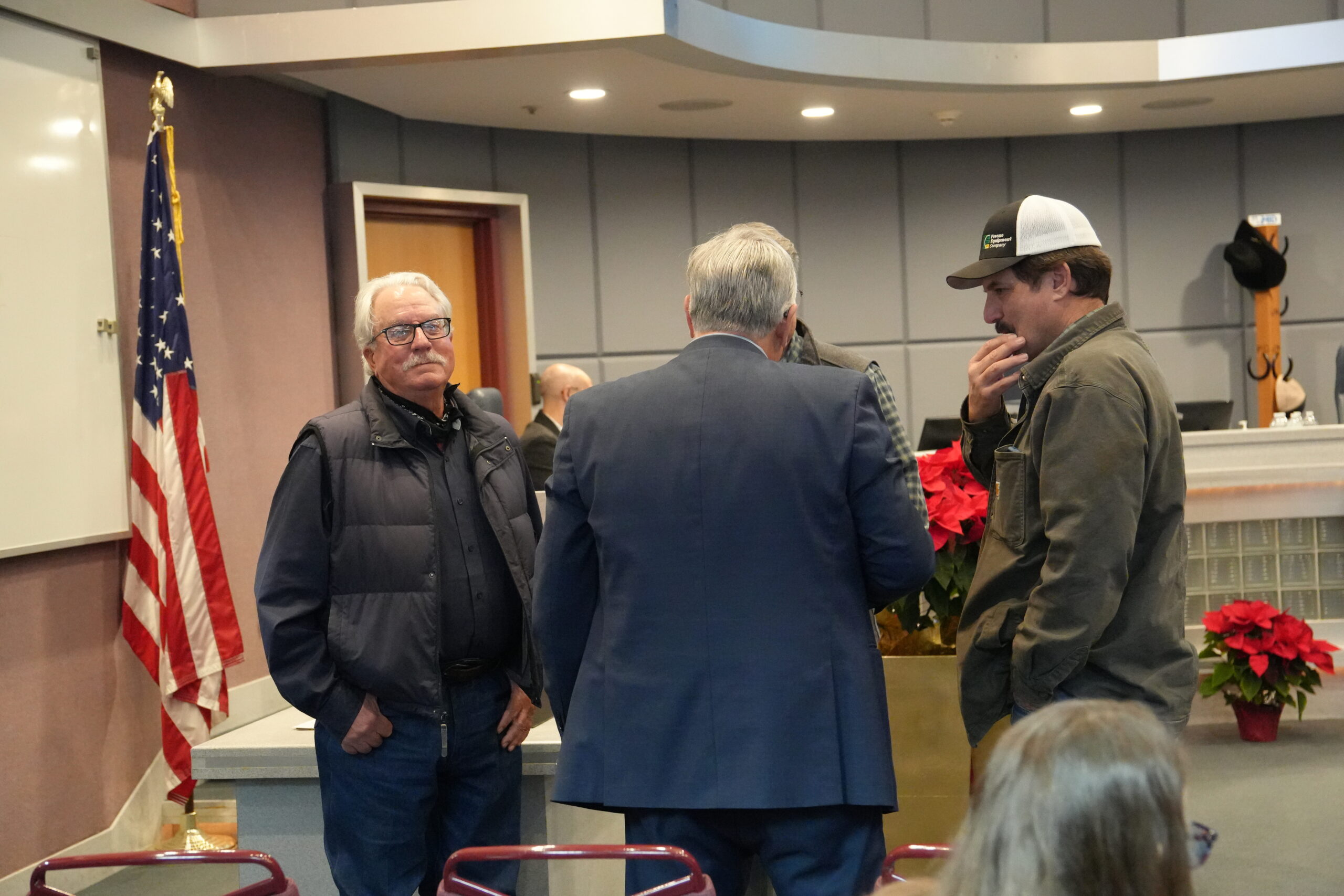
As the MID’s General Manager, Netniss could conceivably have relied on Splendorio for advice on what most any observer could see was a conflict of interest. It appears Netniss didn’t even inquire.
While Netniss’s job description might not include at least a casual familiarity with California’s most widely recognized rules for public agencies, Splendorios’s job description most certainly does. Given their positions as the responsible authorities regarding proper practice during public meetings, it’s hard to imagine both men were ignorant of guidelines as fundamental as those laid down by the Brown Act.
The question now is what will Splendorio and Netniss do to remedy their neglect? Larry Byrd voted to end an investigation into his irrigation practices on a ranch he farms and has partnership interests in. That vote was clearly impermissible under the authority of California’s most widely known rules governing public meetings.
Together with the Political Reform Act (PRA), the Brown Act prevents public officials from using public office to further their own interests. Last Tuesday, Larry Byrd voted to further his own interest. That vote was in clear violation of the PRA and Brown Act.
At the very least, Jimi Netniss and Frank Splendorio owe the public an explanation for their failure to follow one of the most fundamental rules governing public policy in California. At the very least.
I also was wondering why he was able to vote. Can nothing be done at this point? What a flagrant violation of procedure.
The Brown Act is not relevant to this issue, and has no provisions regarding conflicts of interest. Those issues are governed by the Political Reform Act and the entity’s Conflict of Interest Policy.
https://fppc.ca.gov/learn/conflicts-of-interest-rules.html
Thank you for the clarification. As I understand it, the Brown Act and PRA act in tandem.
You should also look at the definitions of the Levine Act and “self-dealing” laws that prevent people from actions to benefit themselves at the cost of public interest/funds. Especially where the blurry line of elected and appointed officials co-mingle.
Also did anyone ever explain the “Hatch Act” that was referenced? They weren’t talking about political contributions, were they? Is there another Hatch Act that is different from the Federal one?
Comments are closed.